

Foot Pain Relief in Grapevine, TX with Chiropractic and Acupuncture Care
Foot pain can be a brief nuisance after activity or a persistent problem—conditions like plantar fasciitis, heel spurs, metatarsalgia, neuromas, and toe pain can all make walking and daily life harder. This guide explains common causes and symptoms, how non-surgical care—specifically chiropractic adjustments and acupuncture—can reduce pain and restore your gait, and practical next steps for people in Grapevine, TX. You’ll learn to spot symptom patterns by location (heel, arch, toes), understand the biomechanical and neurophysiologic reasoning behind each treatment, and follow a clear care pathway from assessment to at-home self-care. The recommendations focus on evidence-informed choices, realistic recovery timelines, and how combining therapies can speed recovery and avoid more invasive options. Read on for condition profiles, technique summaries, acupoint highlights, an initial consultation checklist, and prevention tips you can use right away.
Chiro & Acupuncture Inc. offers integrated Eastern and Western care in Grapevine, blending chiropractic extremity adjustments with acupuncture-based pain modulation and rehab plans. We provide a complimentary initial consultation and accept many in-network insurance plans to lower barriers for patients exploring non-surgical care. Our providers—Dr. Taeho Lee, D.C., and Dr. Sunny Han, DACM, L.Ac.—collaborate to align your mechanics and reduce pain with individualized plans. This overview prepares local readers to consider practical, evidence-informed foot care; the sections that follow dig into clinical details and self-management steps.
What Are the Common Causes and Symptoms of Foot Pain?
Foot pain appears when the structures in the foot—muscles, tendons, fascia, joints, or nerves—are overloaded, inflamed, or compressed. The most common mechanism is altered load distribution that raises focal stress on the plantar fascia, heel, metatarsals, or toes. Typical contributors include overuse, faulty biomechanics (like overpronation), improper footwear, repetitive sports loading, and systemic factors such as obesity or inflammatory conditions. Knowing whether your pain sits in the heel, arch, or forefoot helps narrow the likely diagnosis because different structures produce distinct symptom patterns. Early recognition and targeted conservative care often prevent chronic problems and reduce the need for injections or surgery.
Use the short list below to self-assess and to describe your symptoms clearly during evaluation.
- Overuse and repetitive strain — activities like running, long standing, or sport can inflame the plantar fascia or adjacent tendons.
- Faulty biomechanics — issues such as overpronation or very high arches change load paths and concentrate stress in specific areas.
- Poor footwear or sudden changes — narrow shoes, rapid weight gain, or abrupt activity increases raise the risk of plantar fasciitis and heel pain.
These common causes point to conservative, load-management strategies as the first line of care and guide clinicians toward manual therapy, orthotic advice, and graduated loading programs.
Which Foot Conditions Cause Heel, Toe, and Arch Pain?
Specific conditions often match predictable symptom locations. Plantar fasciitis usually causes sharp heel pain during the first steps after rest. Heel spurs are calcium deposits seen on X-ray that often reflect long-standing plantar fascia tension rather than being the sole pain source. Metatarsalgia creates burning or aching under the ball of the foot and typically worsens with high-impact activity. Neuromas produce sharp, shooting, or tingling sensations between toes and are frequently provoked by tight shoes or nerve compression. Pinpointing where the pain starts and what brings it on helps prioritize conservative treatments like biomechanical correction, targeted soft-tissue work, and sensory-directed strategies.
These condition profiles form the basis for a focused, non-surgical care plan that aims to restore function and reduce symptoms.
How Can You Recognize Symptoms Like Plantar Fasciitis and Heel Spurs?
Plantar fasciitis is marked by focal tenderness at the plantar heel and typical “first-step” pain after rest; the pain often eases as you move around but can return after long standing. Heel spurs show up on imaging as bony growths but usually signal chronic plantar fascia strain rather than the main source of pain. Simple self-checks include feeling for point tenderness at the inside of the heel (medial calcaneal tubercle) and doing a single-leg heel raise to test load tolerance and reproduce symptoms. Seek urgent care if you have sudden severe swelling, numbness or loss of skin sensation, systemic symptoms, or an inability to bear weight—these are red flags that need prompt evaluation.
Recognizing these patterns early helps you get the right conservative care and avoid prolonged dysfunction.
How Does Chiropractic Care Help Relieve Foot Pain in Grapevine?
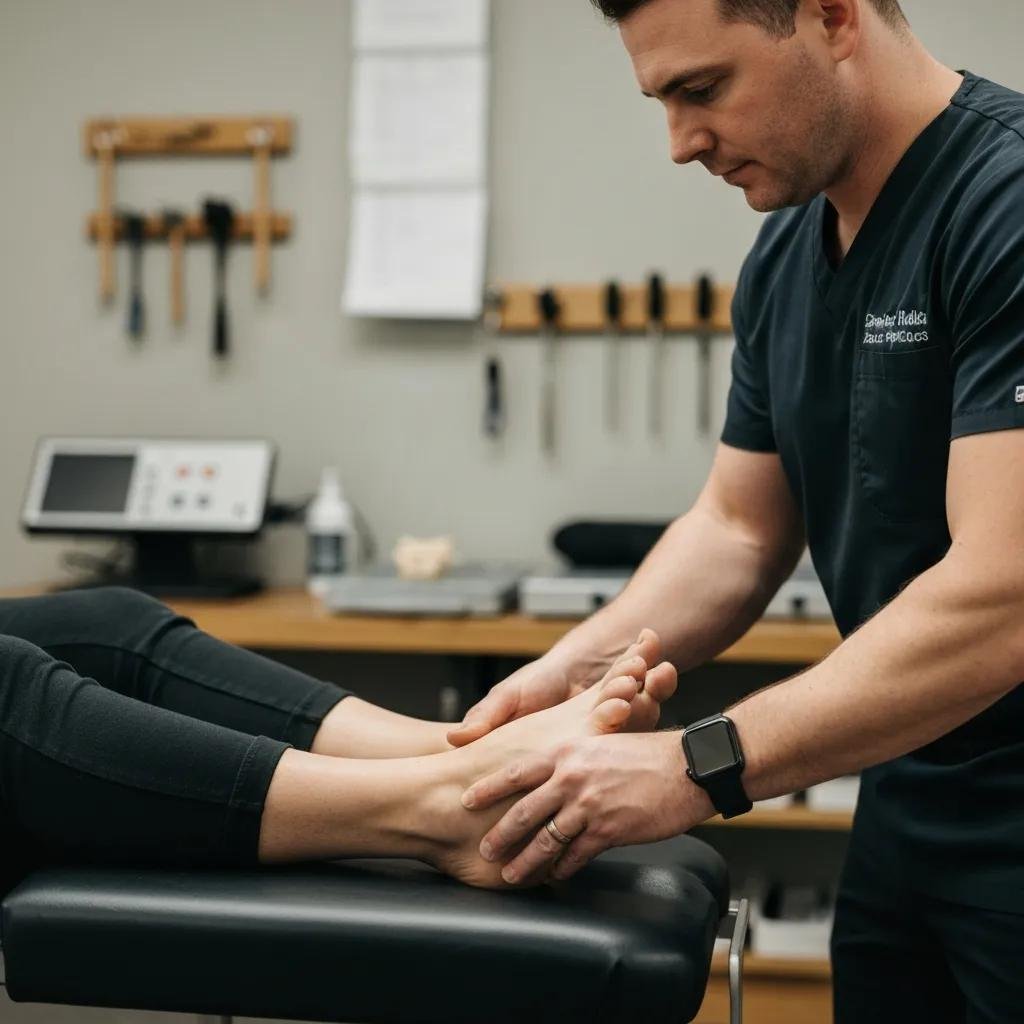
Chiropractic care eases foot pain by restoring joint alignment, improving ankle and subtalar mobility, and normalizing lower-extremity mechanics so plantar loads are more evenly distributed and focal tissue strain decreases. Treatment combines targeted extremity adjustments, joint mobilization, soft-tissue techniques, and functional rehabilitation to improve range of motion and neuromuscular control. The result for many patients is less pain, more symmetric gait, and a quicker return to activity for conditions like plantar fasciitis and heel pain. Contemporary practice often combines spinal and extremity work because alignment higher in the chain (pelvis, ankle) influences foot loading.
At Chiro & Acupuncture Inc., we use specific extremity adjustment protocols with soft-tissue mobilization and provide a complimentary consultation to see if these techniques fit your case. That first visit emphasizes objective gait assessment and clear function targets so you leave with a short-term plan and measurable benchmarks for improvement.
Different chiropractic methods target foot structures with specific goals and mechanisms; the table below outlines common approaches used to improve foot and ankle alignment.
What Chiropractic Techniques Are Used for Foot and Ankle Alignment?
We use a range of foot-and-ankle techniques—from manual extremity adjustments and joint mobilizations to soft-tissue therapies and instrument-assisted approaches—to reduce pain and restore motion. Extremity adjustments focus on tarsal and metatarsal joints to improve alignment and proprioception. Mobilizations restore gentle joint glide in stiff areas that contribute to abnormal loading. Soft-tissue work, including myofascial release and instrument-assisted soft-tissue mobilization, targets plantar fascia tightness and calf restrictions that worsen heel pain. Paired with a graded rehab program, these methods improve function and lower the chance of recurrence by addressing both structure and motor control.
This multimodal approach aims for immediate symptom relief plus progressive gains that reduce relapse risk.
How Does Chiropractic Care Improve Foot Biomechanics and Reduce Pain?
Chiropractic care improves biomechanics by correcting joint misalignments and restoring coordinated movement from the ankle and subtalar joint up through the pelvis. That correction redistributes plantar pressures and reduces focal overload. In plain terms: adjustments correct alignment, which helps spread load across the foot and lowers microtrauma to the plantar fascia and nearby tendons. Better mechanics also normalize gait, cutting down compensatory strain on knees and hips, so patients often see broader functional improvements—not just less pain. Timelines vary, but many people notice measurable pain reduction and better task tolerance within 2–6 weeks of combined adjustments and rehab.
Seeing how alignment affects load helps explain why early mechanical care can speed recovery and reduce chronic symptoms.
How Can Acupuncture Provide Effective Relief for Plantar Fasciitis and Heel Pain?
Acupuncture helps by engaging neurophysiologic pathways that reduce pain signaling, modulate local inflammation, and support tissue healing through improved microcirculation and neuromodulation. Needling at local and distal points can trigger endogenous opioid release, lower peripheral sensitization, and change central pain processing—effects that many trials have shown reduce symptoms. When acupuncture is combined with mechanical treatments, it addresses both nociceptive and biomechanical drivers of plantar fasciitis, offering a complementary route to reduce pain and improve function. Recent studies report clinically meaningful pain reduction for patients receiving acupuncture versus standard conservative care.
Acupuncture Effectiveness for Plantar Fasciitis Pain Reduction
A review found several trials comparing acupuncture with standard care—and one comparing real versus sham needling—showing that acupuncture significantly lowered pain scores for plantar fasciitis patients on measures like the visual analogue scale and condition-specific disability scales.
At Chiro & Acupuncture Inc., we combine acupuncture with chiropractic care to reduce symptoms and address the nervous system factors that sustain chronic pain. Patients can review combined options during a complimentary consultation to see what fits their goals.
The table below summarizes common acupuncture points and modalities used for heel and plantar pain and what clinical effects they aim to produce.
Which Acupuncture Points Target Foot Pain and Inflammation?
Practitioners typically combine local tender-point needling with established distal points that influence lower-extremity mechanics and central pain pathways. Local Ashi points near the medial calcaneal insertion address local nociception and promote microvascular flow, while distal points such as SP6 and GB34 help regulate muscle tone and central processing. Electro-acupuncture may be used across paired local points to maintain analgesia between sessions. Point selection is individualized—balancing local tissue recovery with broader neuromodulatory goals.
This local-plus-distal strategy tends to reduce pain more consistently than targeting a single site because it treats both the source and systemic contributors to foot pain.
What Is the Evidence Supporting Acupuncture for Plantar Fasciitis Relief?
Recent randomized trials and meta-analyses show that acupuncture can produce meaningful reductions in pain and improvements in function for many patients with plantar fasciitis compared with usual conservative care. The benefits likely reflect both peripheral anti-inflammatory effects and central neuromodulation, with many patients reporting early pain relief after a few sessions and continued gains when acupuncture is paired with rehabilitation. For people who prefer non‑pharmacologic care or who have only had partial benefit from mechanical treatments alone, acupuncture is an evidence-informed adjunct that complements chiropractic biomechanics work.
Combining modalities follows current best-practice trends that favor multimodal, patient-centered, non-surgical strategies.
Why Choose Chiro & Acupuncture Inc. for Foot Pain Treatment in Grapevine?
Chiro & Acupuncture Inc. uses an integrated East–West model that combines chiropractic extremity adjustments, targeted soft-tissue care, and acupuncture-based neuromodulation to address both biomechanical and neurophysiologic drivers of foot pain. We emphasize individualized care pathways that begin with a complimentary consultation to map function, identify mechanical contributors, and prioritize safe, conservative treatments. Administrative benefits include acceptance of many in-network insurance plans and coordinated care between licensed providers—Dr. Taeho Lee, D.C., and Dr. Sunny Han, DACM, L.Ac.—so you receive a unified plan rather than fragmented advice. This coordinated model shortens the path from diagnosis to effective rehabilitation by pairing manual correction with sensory-based pain control.
Our integrated approach pairs structural correction with acupuncture’s pain-modulating effects to treat both the mechanical source and the nervous system’s response: Chiropractic alignment → reduced mechanical load → acupuncture modulates pain signaling. Patients benefit because the plan targets root causes and symptomatic drivers at the same time, often speeding return to normal activity. For example, a runner with plantar fasciitis might receive targeted mobilization to restore subtalar motion while acupuncture calms heightened pain sensitivity, allowing earlier and more effective rehab. This sequencing is especially helpful for people who have plateaued after single-modality care.
Acupuncture and Chiropractic Care for Chronic Musculoskeletal Pain
Complementary treatments like acupuncture and chiropractic are commonly sought for chronic musculoskeletal pain and have strong acceptance among physicians and patients. Given concerns about the costs and side effects of opioids and surgery, evaluating real-world outcomes from non-pharmacologic, non-surgical approaches is increasingly important.
How Does Our Complimentary Consultation and Insurance Acceptance Benefit Patients?
Our complimentary consultation gives you a low-barrier way to get a structured assessment—history, focused exam, and gait review—so we can clarify the diagnosis and outline appropriate treatment options without an upfront charge. In that visit we review expected timelines, conservative alternatives, and whether orthotics or referrals may be needed, helping you make an informed plan. Accepting many in-network insurance plans reduces unexpected out-of-pocket costs and makes coordinated, conservative care more accessible for local families and athletes. You’ll leave with a clear, written plan that lists next steps and measurable goals to simplify follow-up and progress tracking.
What Should You Expect During Your Initial Foot Pain Consultation?
Your first consultation follows a structured diagnostic flow—complete history, targeted physical exam, gait and footwear assessment, and selective imaging only when indicated—to identify the primary pain generator and screen for red flags. Evaluation is functional: clinicians test load tolerance, joint mobility, and neurosensory findings to build a reproducible diagnosis that guides treatment. Most consultations include teaching simple self-tests, a brief manual intervention when appropriate, and a written plan for next steps. This practical, data-driven approach ensures any recommended adjustments or acupuncture match your specific biomechanics and pain profile.
Below is a concise diagnostic steps table showing what to expect during the consultation and why each step matters.
How Is Foot Pain Diagnosed and Assessed at Our Clinic?
Diagnosis relies on combining your symptom history with targeted hands-on tests that reproduce pain and reveal mechanical deficits. For instance, passive dorsiflexion and focused palpation often reproduce plantar fascia pain in typical plantar fasciitis. Gait analysis and footwear inspection give practical clues about chronic loading patterns that keep symptoms going. Functional tests—like single-leg heel raises—measure capacity and track progress. Imaging is reserved for unusual presentations, suspected fractures, or cases that don’t improve with conservative care. This pragmatic diagnostic flow supports timely treatment and appropriate escalation when necessary.
Findings from the assessment translate directly into a personalized plan that targets the main drivers of your pain.
What Are the Next Steps After Your Consultation?
After your consultation, common next steps include starting targeted manual therapies and acupuncture as indicated, beginning a home exercise and stretching routine, and scheduling a short-term follow-up to reassess function and pain within 1–3 weeks. You may receive footwear advice or temporary orthotic suggestions to offload sensitive areas while tissues heal and neuromuscular retraining occurs. Signs of improvement include less first-step pain, greater single-leg tolerance, and measurable gains in gait symmetry; if expected progress doesn’t appear, we reevaluate the diagnosis and consider referral. We coordinate follow-up and progression criteria so care stays goal-oriented and time-limited.
This stepwise approach helps you track recovery and ensures timely adjustments if progress stalls or red flags emerge.
How Can You Manage and Prevent Chronic Foot Pain with Holistic Care?
Long-term management focuses on progressive loading, better footwear, intrinsic foot strengthening, and maintenance visits to preserve biomechanics and prevent recurrence. We balance activity modification with graded strengthening of the calf and intrinsic foot muscles to improve load distribution. Lifestyle measures—weight management, appropriate cross-training, and supportive shoes—reduce repeated injurious loads, while occasional manual or acupuncture maintenance can address emerging tension before it becomes pain. A coordinated maintenance plan links objective markers (pain scores, activity levels) to visit frequency, creating a measurable path to sustained wellness.
Below is a practical exercise list to support plantar fascia recovery and strengthen intrinsic foot muscles.
- Calf Stretch (3×30 seconds per side daily): Lean into a wall with the back leg straight to lengthen the gastrocnemius and reduce plantar fascia tension.
- Plantar Fascia Stretch (3×30 seconds each morning): Cross the ankle and pull the toes toward the shin to gently stretch the fascia before your first steps.
- Towel Curls (2 sets of 10 reps): While seated, curl a towel under your toes to strengthen intrinsic foot muscles and support the arch.
- Single-Leg Balance Progression (2 minutes per side): Start on flat ground and progress to an unstable surface to retrain proprioception and ankle control.
What Exercises and Stretches Support Foot Pain Relief?
Specific exercises lower tensile stress on the plantar fascia and improve dynamic support by strengthening the calf-soleus complex and the small intrinsic foot muscles. Regular calf stretching reduces eccentric load on the fascia, while towel curls and marble pickups strengthen the tiny muscles that help stabilize the arch. Progressive loading—single-leg balance and heel-rise strengthening—rebuilds tolerance for returning to activity and cuts re-injury risk. Typical dosing begins with daily stretching and gradual strengthening three times per week, adjusted to pain levels and functional goals.
Consistent adherence to home exercises is one of the strongest predictors of lasting recovery and improved performance.
How Does Ongoing Chiropractic and Acupuncture Care Promote Wellness?
Ongoing maintenance care aims to preserve improved mechanics, reduce episodic flares, and support activity by combining periodic adjustments, focused soft-tissue work, and intermittent acupuncture as needed. Frequency is individualized—often weekly to biweekly during active rehab, then tapering to monthly or as-needed check-ins once goals are met. Measurable outcomes include lower pain scores, sustained gait symmetry, and improved activity tolerance, which signal successful tapering. Adding lifestyle and ergonomic advice helps ensure structural and neurologic gains translate into long-term wellness and fewer recurrences.
Regular review of goals and objective markers lets clinicians and patients adjust maintenance plans proactively rather than reactively, helping preserve mobility and quality of life.