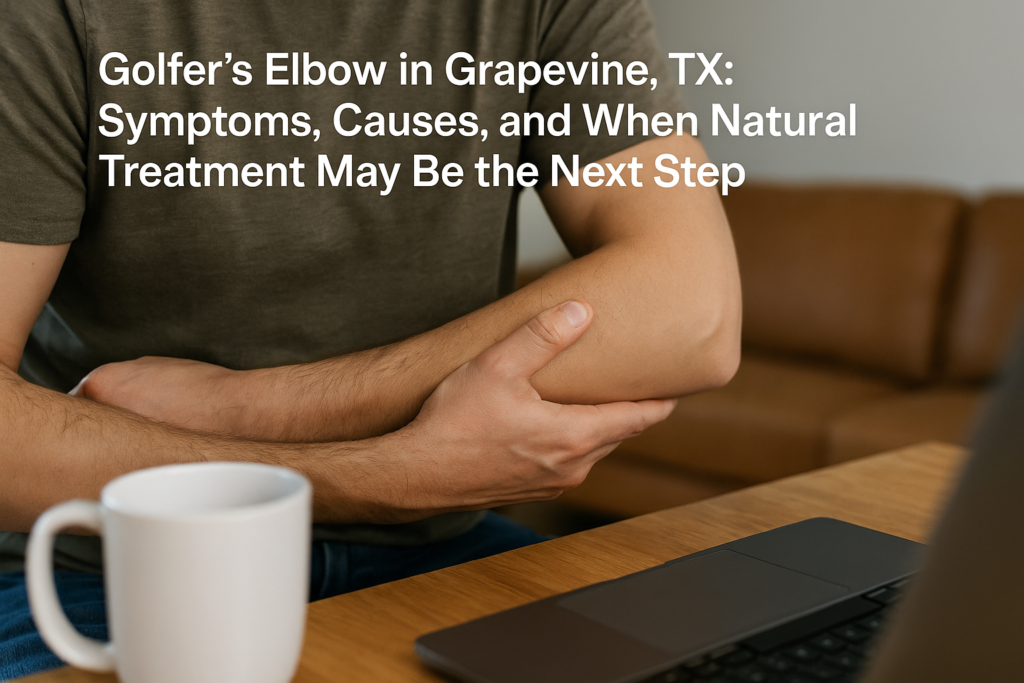
Golfer’s elbow can make ordinary tasks surprisingly difficult. Simple movements like gripping a coffee mug, opening a door, lifting groceries, typing, or swinging a golf club may trigger pain along the inside of the elbow and down the forearm. Although the name suggests it only affects golfers, this condition is common in many active adults, office workers, tradespeople, and anyone who repeats the same hand, wrist, or forearm motions.
For people looking for golfer’s elbow treatment in Grapevine TX, understanding the condition is the first step toward choosing the right care. Medically known as medial epicondylitis, golfer’s elbow develops when the tendons that attach the forearm muscles to the inner elbow become irritated or overloaded. In some cases, symptoms settle down with rest and activity changes. In others, the pain lingers and begins to affect work, sleep, exercise, and daily comfort.
This article explains the most common symptoms, likely causes, and when natural treatment approaches such as acupuncture for elbow pain in Grapevine TX and StemWave for golfer’s elbow in Grapevine TX may be worth considering as part of a broader recovery plan.
What Is Golfer’s Elbow?
Golfer’s elbow is a tendon overuse condition that affects the tendons on the inner side of the elbow. These tendons help control wrist flexion and gripping strength. When they are repeatedly stressed, small areas of tissue irritation can develop. Over time, this may lead to pain, tenderness, stiffness, and weakness.
The medical term, medial epicondylitis, refers to the location of the problem. The medial epicondyle is the bony bump on the inside of the elbow where several forearm muscles attach. Despite the athletic nickname, many people with medial epicondylitis in Grapevine TX have never played golf. The condition is often related to repetitive strain rather than a single injury.
It is also important not to confuse golfer’s elbow with tennis elbow. Tennis elbow affects the outside of the elbow, while golfer’s elbow affects the inside. Both involve overworked tendons, but the pain pattern and involved muscle groups are different.
Common Symptoms of Golfer’s Elbow
Symptoms can begin gradually or appear after a period of heavier-than-usual activity. In the early stages, discomfort may only show up during certain movements. As irritation progresses, the pain may become more noticeable throughout the day.
Pain on the inside of the elbow
The most recognizable symptom is aching or tenderness on the inner side of the elbow. Some people describe it as a dull soreness, while others feel a sharper pain during gripping or lifting.
Forearm tightness or soreness
Pain may extend from the inside of the elbow down into the forearm. This can create a sense of tightness, especially after repetitive hand use.
Weak grip strength
Many people notice that it becomes harder to hold, squeeze, or carry objects. Turning a doorknob, shaking hands, or lifting a bag can suddenly feel uncomfortable.
Pain with wrist flexion or twisting
Movements such as curling the wrist, using tools, swinging a club, or even pouring from a heavy container may aggravate symptoms because they place stress on the affected tendons.
Stiffness, especially after rest
The elbow and forearm may feel stiff first thing in the morning or after sitting still for a while. Gentle movement sometimes improves it, but repeated use can bring the pain back.
Numbness or tingling in some cases
Although not always present, irritation near the inner elbow can sometimes contribute to symptoms that travel toward the ring and little fingers. This may suggest nearby nerve irritation and should be evaluated carefully.
If the discomfort has been ongoing, worsening, or interfering with normal life, it may be time to look more closely at available treatment options.

What Causes Medial Epicondylitis?
Medial epicondylitis in Grapevine TX is usually caused by repetitive stress rather than one dramatic injury. The tendons on the inside of the elbow can become overloaded when the same movement pattern is repeated without enough rest or recovery.
Sports and recreational activities
Golf is only one possible trigger. Racquet sports, throwing sports, weight training, climbing, and certain fitness routines can all strain the forearm flexor tendons. Technique problems, gripping too tightly, or increasing training volume too quickly can make symptoms more likely.
Work-related repetition
People who use hand tools, perform assembly work, type for long periods, lift repeatedly, or do frequent gripping and wrist bending may place ongoing stress on the inner elbow. Tradespeople, mechanics, warehouse workers, healthcare workers, hair stylists, and desk workers can all develop golfer’s elbow.
Poor movement mechanics
Sometimes the elbow is not the only issue. Limited shoulder mobility, weak upper back support, poor wrist positioning, or repetitive strain from posture may shift excess load to the forearm tendons.
Sudden increase in activity
A new workout, weekend yardwork, extra sports practice, or home improvement project can overload tissues that are not used to that level of demand.
Incomplete recovery
When a mild tendon problem is ignored, the tissue may not have enough time to settle down. Repeated flare-ups can turn a short-term issue into a more stubborn one.
Understanding the underlying cause matters because effective treatment is not only about reducing pain. It should also address the patterns that may have contributed to the problem in the first place.
Who Is Most at Risk?
Golfer’s elbow can affect a wide range of adults, but some factors make it more likely:
- Frequent gripping, lifting, or wrist flexion
- Repetitive sports practice without proper recovery
- Poor ergonomics at work or during hobbies
- Sudden changes in training intensity or activity level
- Previous tendon irritation or upper extremity overuse injuries
- Muscle imbalances affecting the shoulder, forearm, or wrist
The condition may start as a minor annoyance, but without the right adjustments, it can become more limiting over time.
When Symptoms Should Not Be Ignored
Not every case of elbow pain requires extensive treatment, but persistent symptoms deserve attention. It may be wise to seek professional evaluation if:
- The pain lasts more than a few weeks
- Symptoms keep returning when you resume normal activity
- Your grip feels noticeably weaker
- Daily tasks are becoming painful
- You have radiating numbness or tingling
- Rest, ice, and basic self-care are not helping enough
Chronic tendon irritation can become harder to calm down if it is repeatedly aggravated. Early care may help reduce strain and support a more manageable recovery process.
Conservative and Natural Treatment Approaches
Most people with golfer’s elbow begin with conservative care. The goal is to reduce irritation, support healing, and gradually restore strength and normal function. For those exploring golfer’s elbow treatment in Grapevine TX, a natural approach often focuses on improving tissue quality and movement rather than simply masking symptoms.
Activity modification
This does not always mean complete rest. More often, it means reducing the motions that trigger pain, adjusting technique, changing equipment, or temporarily scaling back repetitive tasks. The right balance matters because too much rest may contribute to stiffness, while too much activity can keep the tendon irritated.
Targeted exercises
Gentle mobility work and progressive strengthening are common parts of recovery. Tendons often respond best to gradual loading rather than inactivity. A structured plan may help improve resilience in the forearm, wrist, elbow, and surrounding support muscles.
Manual and supportive therapies
Hands-on care, soft tissue work, stretching guidance, posture correction, and movement-based treatment may help reduce tension and improve mechanics through the upper extremity.
Acupuncture
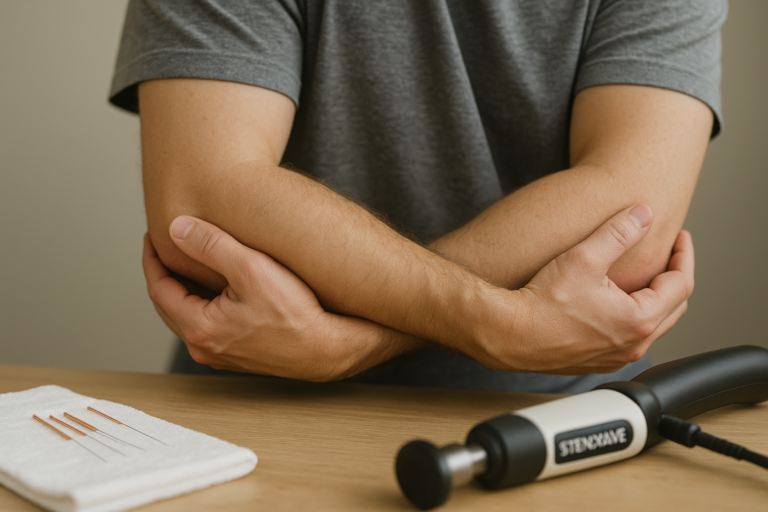
Many people consider acupuncture for elbow pain in Grapevine TX when they want a non-drug option to help with discomfort and muscle tension. Acupuncture is commonly used to support pain relief, encourage circulation, and promote a more balanced healing environment in irritated tissues. Depending on the individual presentation, treatment may focus not only on the elbow but also on the forearm, shoulder, and related movement chains.
Advanced regenerative-supportive therapies
Some clinics also incorporate newer technologies designed to stimulate healing responses in stubborn soft tissue conditions. This can be especially relevant when symptoms have lingered beyond the earliest phase.
How StemWave May Fit Into a Natural Care Plan
When conservative care has not fully resolved the issue, some people become interested in StemWave for golfer’s elbow in Grapevine TX. StemWave therapy uses sound waves with the goal of stimulating tissue regeneration and reducing inflammation in painful areas. It is often discussed in the context of tendon irritation, sports injuries, and other musculoskeletal complaints.
In a condition like golfer’s elbow, the aim of this type of therapy is to support the body’s natural repair response in the affected tendon area. Because chronic tendon problems may involve tissue degeneration as well as irritation, approaches that focus on stimulating healing can be appealing to people seeking non-surgical options.
StemWave may be considered as part of a broader treatment strategy rather than a stand-alone shortcut. In many cases, the best results come from combining tissue-focused therapies with movement correction, progressive exercise, and activity changes that reduce reinjury risk.
As with any treatment, suitability depends on the individual, symptom duration, overall health picture, and professional evaluation.
Why a Personalized Treatment Plan Matters
One reason golfer’s elbow can be frustrating is that not every case has the same driver. For one person, the main issue may be sports technique. For another, it may be repetitive job strain, poor posture, shoulder dysfunction, or a cycle of overuse and incomplete healing.
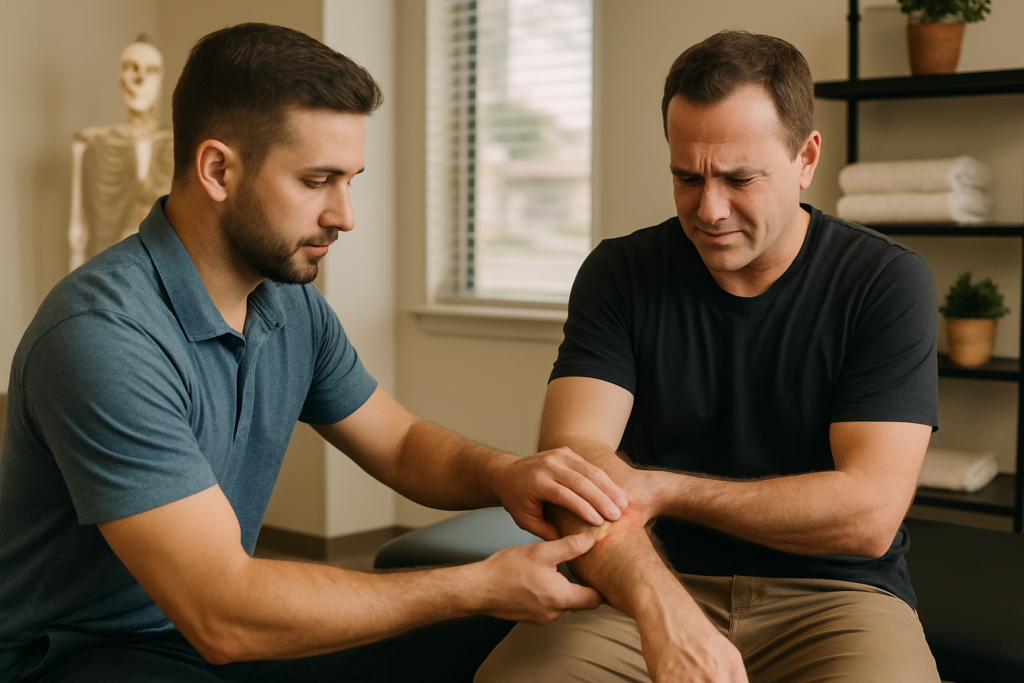
A personalized care plan can help address:
- The exact location and severity of symptoms
- Whether pain is acute or long-standing
- Movement habits contributing to overload
- Grip strength and forearm function
- Whether nearby joints or muscles are affecting the elbow
- Which non-invasive treatments may be appropriate
This is especially important when symptoms are not improving with generic self-care alone. A broader musculoskeletal assessment may reveal why the elbow keeps flaring up.
Practical Ways to Support Recovery at Home
Professional treatment can be helpful, but daily habits also matter. People dealing with medial epicondylitis in Grapevine TX often benefit from a few practical adjustments:
Reduce repeated aggravation
Pay attention to the specific motions that trigger symptoms. Temporarily reducing repetitive gripping, heavy lifting, or forceful wrist flexion can help calm the tendon.
Improve ergonomics
If your work involves typing, tools, or repetitive hand use, small changes in wrist position, workstation setup, and body mechanics may reduce strain.
Warm up before activity
Whether you are heading to the gym, the golf course, or a physically demanding job, a proper warm-up can prepare the forearm and shoulder muscles for load.
Progress gradually
Returning too quickly to full intensity often leads to another flare-up. It is usually better to rebuild capacity step by step.
Address the whole kinetic chain
Shoulder stiffness, scapular weakness, and poor upper body coordination can shift stress to the elbow. Recovery may improve when the entire movement pattern is considered.
Do not rely only on pain avoidance
Once pain settles, the tendon still may need progressive conditioning. Without rebuilding strength and tolerance, symptoms can return with the next period of heavy use.
When Natural Treatment May Be the Next Step
Many cases of golfer’s elbow improve with time, rest, and simple changes. However, natural treatment may be the next step when the problem is no longer responding to basic self-care or when the discomfort is affecting quality of life.
You may want to explore more structured non-invasive care if:
- The pain has become persistent or recurrent
- You are avoiding activities you enjoy
- Your work tasks keep aggravating the elbow
- You want to support healing without depending only on medication
- You are interested in approaches such as acupuncture or StemWave therapy
- You want a plan that looks beyond the elbow itself
For some individuals, early intervention can help prevent a nagging tendon issue from becoming a long-term functional problem.
The Bigger Picture: Elbow Pain Can Affect More Than the Elbow
One of the overlooked aspects of golfer’s elbow is how much it can disrupt everyday life. Pain on the inner elbow can interfere with workouts, golf, tennis, home projects, sleep positioning, office productivity, and even routine household chores. Over time, people may unconsciously compensate by using the other arm more or changing how they move, which can create strain elsewhere.
That is why a thoughtful, conservative treatment strategy often looks at both pain relief and long-term function. When tissue irritation is addressed together with mobility, strength, and mechanics, people are often better positioned to return to normal activities with more confidence.
Conclusion
Golfer’s elbow is more than a sports injury. It is a common overuse condition that can affect anyone whose daily life involves repetitive gripping, lifting, twisting, or wrist motion. If you are experiencing pain on the inside of the elbow, reduced grip strength, or recurring forearm soreness, the issue may be medial epicondylitis.
For those searching for golfer’s elbow treatment in Grapevine TX, it is important to understand that lasting improvement often depends on more than short-term rest. Identifying the cause, reducing repetitive strain, restoring strength, and considering natural therapies when appropriate can all play a role in recovery. Options such as acupuncture for elbow pain in Grapevine TX and StemWave for golfer’s elbow in Grapevine TX may be worth exploring for individuals looking for non-invasive ways to support healing and reduce inflammation.
The earlier persistent symptoms are addressed, the better the chance of preventing a minor tendon problem from becoming a longer-lasting limitation. With the right plan, many people can move toward better comfort, better function, and a more confident return to the activities that matter most.