

Top Chiropractic & Acupuncture Care for Hand and Wrist Pain in Grapevine, TX — Practical Relief and Treatment Options
Hand and wrist pain can interfere with work, hobbies, and everyday tasks — causing numbness, weakness, or persistent discomfort that won’t quit. This guide breaks down common causes, non-surgical options supported by evidence, and how a coordinated chiropractic and acupuncture plan can ease nerve compression and restore function right here in Grapevine. You’ll learn how median nerve compression shows up as carpal tunnel syndrome, which signs need prompt evaluation, how wrist and spinal adjustments address mechanical contributors, and how acupuncture changes pain and nerve symptoms. We also compare conservative care to surgery, outline typical treatment timelines, and answer the questions patients commonly ask before booking a visit. Practical checklists, clear comparison tables, and local service details are included so you can recognize symptoms, understand treatment mechanics, and decide whether to schedule a complimentary initial consultation.
What Are the Common Causes and Symptoms of Hand and Wrist Pain in Grapevine?
Hand and wrist pain can come from different sources — nerves, tendons, joints, or bones — and each problem produces a fairly characteristic symptom pattern. Median nerve compression at the wrist causes numbness and tingling in the thumb and first three fingers. Tendonitis usually gives localized pain that worsens with movement. Arthritis brings joint stiffness and swelling. Noticing these patterns helps prioritize evaluation and start early treatment to avoid progressive weakness or loss of function. The list below highlights common symptom clusters to help you self-identify likely causes and decide when to seek care.
Common symptom clusters for hand and wrist complaints:
- Numbness or tingling in the thumb, index, or middle fingers — often worse at night.
- Wrist pain that flares with repetitive motion or gripping.
- Swelling, joint stiffness, or reduced range of motion with activity.
- Weakness or dropping objects, which suggests motor involvement.
These clusters point naturally to a closer look at carpal tunnel and how median nerve compression affects function — we explain that next.
Quick reference: common conditions and how they typically present.
How Does Carpal Tunnel Syndrome Affect Hand and Wrist Function?

Carpal tunnel syndrome (CTS) happens when the median nerve is compressed as it passes through the carpal tunnel at the wrist. Early signs are intermittent numbness and nighttime tingling; without treatment, symptoms can progress to constant sensory loss and hand weakness. Functionally, CTS makes fine tasks harder, weakens pinch and grip, and can cause you to drop items or struggle with buttons and writing. Early recognition and conservative care can recover function and often reduce the need for invasive procedures, so timely evaluation matters.
Consider a simple example: a person who first notices nighttime tingling may eventually have trouble holding a coffee cup. Offloading the tunnel, manual therapy, and targeted exercises started early can reverse symptoms and restore day-to-day function — topics covered in the chiropractic treatment section that follows.
Chiropractic Care for Carpal Tunnel Syndrome Relief
Carpal tunnel syndrome occurs when the median nerve is squeezed inside the narrow carpal tunnel at the wrist, causing numbness, tingling, pain, or weakness in the thumb, index, middle fingers, and part of the ring finger. These symptoms can make everyday tasks difficult and often worsen at night. Chiropractic care aims to reduce mechanical compression and improve function through targeted manual work and rehabilitation (Wipperman & Goerl, 2016).
Chiropractic Care Benefits for Carpal Tunnel Syndrome
What Are the Signs of Wrist Numbness and Nerve Compression?
Numbness that follows a nerve distribution is the clearest sign of nerve compression: median nerve problems affect the thumb through the middle finger; ulnar nerve issues affect the ring and small fingers. Concerning signs include persistent weakness, shrinking of the thenar muscles, shock-like pains, or pain traveling up the forearm — all of which deserve prompt evaluation. Simple self-tests (for example, holding the wrists flexed or tapping over the carpal tunnel) can suggest irritation, but formal testing may be required to confirm the diagnosis. If numbness is worsening or you notice steady loss of strength or coordination, seek professional assessment to avoid permanent nerve injury.
Recognizing these diagnostic clues leads naturally to treatment options that relieve compression both mechanically and physiologically — discussed in the chiropractic care section below.
How Does Chiropractic Care Provide Relief for Hand Pain and Carpal Tunnel in Grapevine?
Chiropractic care helps hand and wrist pain by addressing local joint mechanics, soft-tissue restrictions, and spinal alignment that can influence distal nerve function. Techniques such as wrist adjustments, soft-tissue mobilization, and cervical or thoracic spinal work aim to restore normal tissue glide, lower inflammation, and improve nerve conduction from the spine to the hand. These approaches reduce mechanical pressure on the median nerve, improve strength, and decrease pain without surgery. The table below compares common chiropractic interventions, how they work, and the benefits patients can expect.
These combined interventions target both local and proximal contributors to symptoms. Next we describe what a typical wrist adjustment looks like and what to expect.
What Are Chiropractic Wrist Adjustments and How Do They Work?
A chiropractic wrist adjustment is a focused manual technique that restores normal joint movement among the carpal bones, improving mobility and reducing pressure on nearby soft tissues and nerves. The clinician assesses joint play and applies a precise, controlled mobilization or adjustment; many patients feel a quick release or reduced stiffness afterward. Before any manual therapy, we screen for fractures, inflammatory arthritis, or circulatory concerns. Adjustments are often paired with soft-tissue work and home exercises. Mild-to-moderate symptoms commonly improve within a few visits; chronic cases may need a structured course of care with functional retraining.
Adjustments are most effective when combined with patient education and exercises to maintain gains — which ties into how spinal mechanics affect distal nerve function, covered next.
How Does Spinal Biomechanics Influence Hand and Wrist Pain Treatment?
The spine matters because cervical and upper thoracic nerve roots supply the arm and hand. Dysfunction or limited mobility in those spinal segments can cause referred pain or increase nerve sensitivity downstream. Compression, irritation, or reduced motion at the cervical level can alter nerve conduction, allowing hand symptoms to persist even when the wrist looks normal. Addressing spinal alignment and mobility reduces proximal neural tension, improves blood flow and nerve signaling, and complements local wrist care for more lasting relief. Combining spinal work with wrist treatments therefore addresses both the source and the expression of symptoms for better recovery.
Understanding the spinal connection helps patients consider complementary options such as acupuncture, which we describe next and explain how it pairs with biomechanical care.
Can Acupuncture Effectively Manage Wrist Pain and Numbness in Grapevine?
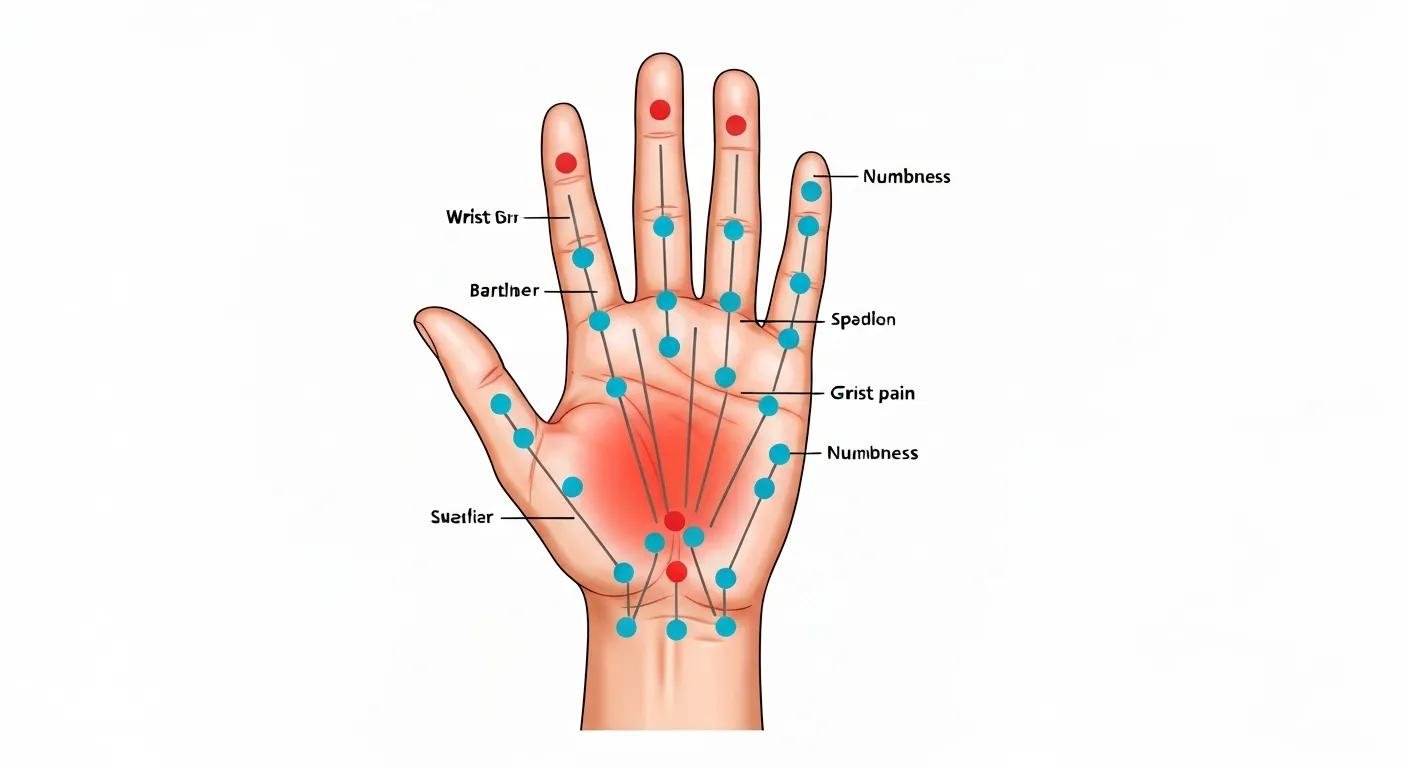
Yes. Acupuncture can be an effective part of a non-surgical plan for wrist pain and numbness by modulating pain pathways, reducing local inflammation, and supporting nerve recovery through neurophysiological effects. Research and clinical experience show acupuncture stimulates the body’s own analgesic systems, improves local circulation, and can lessen neuropathic symptoms when performed by trained practitioners. Acupuncture is often used alongside manual therapies to speed symptom relief, improve sleep disrupted by nocturnal pain, and support gradual restoration of hand function. The table below maps commonly used points to their locations and reported effects to show how point selection targets both local and systemic mechanisms.
Practitioners typically combine local and distal points to address both the immediate source and central pain processing. Next we explain which points are commonly chosen and why.
Which Acupuncture Points Are Targeted for Hand and Wrist Pain Relief?
Clinicians usually pick a mix of local wrist points and distal neuromodulatory points like PC6 and LI4 to target both focal compression and central pain networks. Local needles near the carpal tunnel aim to reduce inflammation and improve tissue glide, while distal points influence central pain processing and peripheral blood flow. Initial treatment frequency is often once or twice weekly, with reassessment after several sessions to track change. Many patients notice reduced pain and better sleep within the first few visits. This point-selection strategy complements chiropractic corrections by creating an environment more favorable to nerve healing and functional recovery.
What Are the Benefits of Combining Eastern and Western Medicine for Hand Pain?
Pairing chiropractic adjustments with acupuncture combines mechanical correction and neurophysiological pain control. Chiropractic techniques restore joint mechanics and relieve proximal neural tension, while acupuncture reduces pain signaling and supports tissue healing. Together they often reduce medication needs, speed functional recovery, and improve sleep. Practical combined plans commonly alternate manual therapy and acupuncture to allow tissue recovery while continuously addressing pain and function. This coordinated approach supports sustained improvement and informs decisions about further conservative care or referral when needed.
Integrating these modalities has shown promising results for many chronic pain patients.
Acupuncture and Chiropractic Care for Chronic Pain Management
Research increasingly supports the role of complementary therapies for chronic musculoskeletal pain. Acupuncture and chiropractic care are among the most accepted and studied non-pharmacological options, and they are frequently used in real-world practice to reduce pain, improve function, and limit reliance on opioids or surgery. Integrated care models that reflect how these therapies are actually delivered in clinics can offer meaningful benefits to patients with chronic pain (Ritenbaugh, 2011).
Why Choose Chiro & Acupuncture Inc. for Hand Pain Care in Grapevine, TX?
Chiro & Acupuncture Inc. blends evidence-informed chiropractic biomechanics with licensed acupuncture to create personalized, non-surgical care plans for Grapevine residents. Our team focuses on restoring function and relieving nerve compression: Dr. Taeho Lee, D.C. specializes in spinal biomechanics and manual therapy, and Dr. Sunny Han, DACM, L.Ac. provides licensed acupuncture and integrative eastern-medicine care. New patients receive a complimentary initial consultation that includes a focused history, exam, and a discussion of conservative treatment options so you can make an informed choice. We accept many in-network insurance plans and see patients at 821 E Northwest Hwy, Suite 100, Grapevine, TX 76051 for coordinated, local care.
What the complimentary consultation includes:
- Focused medical history and review of your symptoms.
- Brief musculoskeletal and neurological exam targeted to hand and wrist function.
- Clear discussion of likely diagnoses and non-surgical treatment options.
- Next steps and scheduling for a personalized care plan.
This practical information explains logistics and clinician roles while keeping the focus on effective, evidence-informed conservative care.
Who Are Dr. Taeho Lee and Dr. Sunny Han and What Are Their Specialties?
Dr. Taeho Lee, D.C. focuses on spinal biomechanics and manual therapy to address proximal contributors to distal nerve symptoms — restoring alignment and joint function to support nerve health. Dr. Sunny Han, DACM, L.Ac. is a licensed acupuncturist who uses integrative eastern approaches to modulate pain and promote tissue repair. Together they develop coordinated plans that pair joint mobilization with neurophysiological pain control, helping many patients pursue non-surgical recovery paths. Introducing the team and their roles helps build trust and shows how integrated care addresses both cause and symptom.
This clinician profile leads into a brief description of what to expect at the complimentary consultation.
What Does the Complimentary Initial Consultation Include?
The complimentary initial consultation at Chiro & Acupuncture Inc. removes barriers to care by offering a no-cost conversation that clarifies diagnosis and immediate options. We listen to your story, perform a focused physical exam, and review evidence-informed treatment pathways. During the visit, clinicians assess symptom patterns, perform simple provocative and neurological tests, and explain likely contributors such as median nerve compression or tendon pathology. The session ends with a recommended plan — often a coordinated course of chiropractic and acupuncture treatments, home exercises, and bracing or activity modification if appropriate — and an opportunity to schedule follow-up care. This assessment helps you understand expected timelines and whether conservative care is a reasonable first step.
Knowing what to expect makes scheduling easier and reduces uncertainty when choosing integrated, conservative care for hand and wrist symptoms.
What Non-Surgical Treatment Options Are Available for Carpal Tunnel Syndrome in Grapevine?
Non-surgical options target mechanical offloading, inflammation control, and improved nerve function by addressing both local wrist mechanics and proximal neural tension. Common conservative choices include chiropractic wrist and spinal adjustments, acupuncture, night splinting, activity modification, therapeutic exercises, and soft-tissue mobilization. The list below summarizes these options with brief descriptions to help you compare benefits and typical indications.
- Chiropractic wrist/spinal adjustments: Restore joint mechanics and reduce proximal neural tension to improve nerve signaling.
- Acupuncture: Modulates pain pathways, reduces local inflammation, and supports nerve recovery when used with manual therapy.
- Splinting and activity modification: Offload the tunnel, especially at night, to reduce symptomatic episodes.
- Therapeutic exercises: Strengthen and stretch wrist and hand muscles to improve function and reduce symptoms.
- Soft-tissue mobilization: Release muscle and tendon adhesions to improve tissue mobility and decrease nerve irritation.
After an initial course of conservative care, clinicians reassess progress. If symptoms improve, care continues until function is restored; if not, further testing or surgical referral may be recommended. This staged approach balances safety, effectiveness, and recovery timelines to help patients avoid unnecessary procedures.
How Does Chiropractic Care Compare to Surgery for Carpal Tunnel Relief?
Conservative care — including chiropractic and other non-surgical treatments — aims to relieve symptoms and restore function while avoiding the risks and recovery time associated with surgery. For many patients with mild-to-moderate symptoms, conservative care offers faster return to activity and fewer immediate complications. Surgical release is more definitive for severe or progressive cases (for example, persistent motor loss or thenar atrophy) or when conservative care fails; it does, however, require recovery time and carries risks such as scar sensitivity or transient nerve irritation. Evidence supports a properly dosed trial of conservative therapy first for many patients, with surgery reserved for refractory or worsening deficits. Clear red flags (progressive weakness, muscle wasting, or failed conservative management) guide timely referral to a surgical specialist.
This comparison frames conservative care as a reasonable first step and clarifies when escalation is appropriate based on clinical progression.
How Can Acupuncture Complement Non-Invasive Carpal Tunnel Treatments?
Acupuncture supports non-invasive care by reducing pain intensity, improving sleep, and making manual therapies more tolerable — which can increase adherence to exercises and activity changes. Typical combined protocols alternate acupuncture and manual therapy across several weeks to control symptoms while mechanical corrections consolidate. Common measurable benefits include reduced nighttime numbness, lower pain scores, and improved grip strength when acupuncture is part of a coordinated plan. Together, these modalities create a synergistic path that supports nerve recovery while minimizing medications and delaying or avoiding surgery when appropriate.
This approach shows how acupuncture can be a valuable adjunct to conservative carpal tunnel treatments.
Chiropractic Care for Hand Numbness and Pain Relief
Many people wake up with pins-and-needles in their fingers or notice gradual numbness that interferes with daily tasks. Chiropractic care offers a gentle, non-invasive option to address underlying mechanical causes of hand numbness and pain. This guide explains common causes, overlapping conditions like CTS, risk factors from everyday activities, proven non-surgical treatments, and practical tips for symptom relief. With input from experienced clinicians, it shows how targeted assessment and conservative care can restore comfort and function without immediate surgery.
Chiropractic Care for Quick Relief for Hand Numbness
What Are Frequently Asked Questions About Hand and Wrist Pain Care in Grapevine?
Patients often ask whether chiropractic care can help numbness and whether acupuncture is safe and effective. Direct, evidence-informed answers set realistic expectations and support timely decisions. Conservative care suits many cases of hand numbness caused by nerve compression, especially when detected early and treated with targeted mechanical and neuromodulatory therapies. Acupuncture, when provided by licensed practitioners, is generally safe and can deliver meaningful symptom relief for many wrist conditions. The short Q&A items below answer common concerns and point to next steps, including scheduling a complimentary consultation.
Can a Chiropractor Help with Hand Numbness and Tingling?
Yes — when numbness and tingling come from mechanical nerve compression or spinal dysfunction, a chiropractor can help. Targeted adjustments, mobilization, and soft-tissue techniques reduce pressure on neural structures, restore joint mobility, and improve neural conduction. Many patients with mild-to-moderate symptoms see improvement over several sessions. Limitations exist: progressive motor loss or severe sensory deficits may require referral for further testing, and clinicians screen for contraindications before manual therapy. Combined with home exercises and activity modification, chiropractic care is a practical first-line option for many people with distal nerve symptoms.
This overview helps you weigh conservative care versus additional diagnostics depending on symptom severity.
Is Acupuncture Safe and Effective for Wrist Pain?
When performed by licensed, trained practitioners, acupuncture has a strong safety profile and can be effective for reducing pain and improving function in conditions like tendonitis and nerve-related wrist pain. Adverse effects are uncommon and minor (brief soreness or mild bruising). Careful point selection and sterile technique minimize risk. Clinical responses vary, but many patients report meaningful relief within a few sessions and measurable functional gains when acupuncture is combined with mechanical therapies. Clear expectations and informed consent make acupuncture a reasonable part of a coordinated conservative plan.
If you’re ready to take the next step, schedule a complimentary initial consultation: call 817-552-7246 or visit our office at 821 E Northwest Hwy, Suite 100, Grapevine, TX 76051 for local, integrated chiropractic and acupuncture care.