Dizziness can be unsettling, especially when it seems to appear out of nowhere. Some people describe a spinning sensation, while others feel lightheaded, off-balance, foggy, or unsteady when turning their head or changing positions. Although inner ear conditions often get the most attention, the neck can also play an important role in how your body senses balance and movement.
For people dealing with cervical dizziness in Grapevine, TX, understanding the possible connection between neck dysfunction and balance problems can be an important first step. Neck stiffness, poor posture, whiplash, muscle tension, arthritis, or joint irritation in the cervical spine may interfere with the body’s normal position-sensing system. In some cases, that disruption may contribute to dizziness or unsteadiness.
This article explains how the neck may affect balance, how vertigo and neck pain in Grapevine, TX may be related, what symptoms deserve prompt medical attention, and how conservative care may fit into a broader evaluation plan. This is general educational information, not a diagnosis. Anyone with persistent, severe, or sudden dizziness should consult a qualified clinician for individualized care.
How the Neck Helps Control Balance
Your sense of balance depends on coordinated input from three major systems:
- The inner ear, which detects motion and head position
- The eyes, which help orient you in space
- The nervous system and joints, including receptors in the neck that tell the brain where your head is positioned
The neck contains muscles, joints, and soft tissues rich in sensory receptors called proprioceptors. These receptors help the brain understand head movement and position. When the information coming from the neck becomes irritated or distorted, it may conflict with signals from the eyes and inner ear. That mismatch may contribute to dizziness, disorientation, or balance problems.
This is one reason some people notice symptoms after a neck injury, during a flare-up of neck pain, or when spending long hours in a forward-head posture at a desk or on a phone.
What Is Cervical Dizziness?
Cervical dizziness, sometimes called cervicogenic dizziness, is a term used when dizziness appears to be associated with neck dysfunction. It is generally considered after other important causes of dizziness have been evaluated, because many conditions can create similar symptoms.
People with cervical-related dizziness often report:
- Neck pain or stiffness
- A feeling of imbalance or unsteadiness
- Dizziness triggered by head movement or certain neck positions
- Reduced neck range of motion
- Tension headaches or headache at the base of the skull
- Symptoms that worsen after prolonged sitting, computer use, driving, or poor posture
Unlike classic spinning vertigo from some inner ear disorders, cervical dizziness may feel more like floating, swaying, disorientation, or a sense that the environment is “off.” That said, symptom descriptions vary, and dizziness should never be self-diagnosed based on a checklist alone.
Why Vertigo and Neck Pain May Show Up Together
The overlap between vertigo and neck pain in Grapevine, TX can be confusing. Sometimes both symptoms happen at the same time, but the root cause may differ from one person to another.
Several neck-related issues may contribute to dizziness or balance complaints:
Whiplash or Sudden Neck Injury
After a car accident, sports injury, or sudden jolt, the cervical spine and surrounding soft tissues can become inflamed or strained. Whiplash may alter normal joint movement, muscle function, and proprioceptive signaling. Some people develop dizziness along with headaches, neck pain, and reduced motion.
Poor Posture and Muscle Tension
Forward-head posture and rounded shoulders can place ongoing stress on the upper cervical muscles and joints. Over time, this may lead to tightness, stiffness, and headaches. In some cases, the strain may also contribute to symptoms of disequilibrium or motion sensitivity.
Arthritic Changes or Joint Restriction
Degenerative changes in the neck, along with restricted joint motion, may affect mobility and create irritation in the structures that help sense head position. This can be one factor in dizziness, especially in older adults, though it should be evaluated carefully because dizziness in this age group can have many possible causes.
Muscle Spasm and Trigger Points
Tense muscles in the neck and upper shoulders can contribute to pain, headaches, and a sense of imbalance. While muscle tightness alone is not always the full explanation, it may play a meaningful role in some patients.
Headaches Linked to Neck Dysfunction
Cervicogenic headaches and tension-related headaches may coexist with dizziness. Pain, guarding, and altered movement patterns can all affect how the nervous system processes position and motion.
Cervical Dizziness vs. Other Common Causes of Dizziness
Because dizziness can come from many sources, a careful evaluation matters. The table below highlights some broad differences. These are general patterns only, not a substitute for diagnosis.
| Possible Cause | Common Features | Often Associated With |
|---|---|---|
| Cervical dizziness | Unsteadiness, disorientation, dizziness linked to neck movement or posture | Neck pain, stiffness, headache, reduced range of motion |
| Inner ear vertigo | Spinning sensation, motion sensitivity, nausea, positional episodes | Ear symptoms may or may not be present; symptoms often triggered by head position changes |
| Medication or blood pressure related dizziness | Lightheadedness, faint feeling, symptoms when standing | Medication changes, dehydration, cardiovascular factors |
| Neurologic or urgent medical causes | Sudden severe dizziness, coordination problems, new neurologic symptoms | Weakness, numbness, slurred speech, severe headache, vision changes |
Symptoms That Deserve Prompt Medical Attention
Dizziness is sometimes benign, but it can also signal a serious medical problem. Seek urgent medical care right away if dizziness occurs with any of the following:
- Chest pain or shortness of breath
- Sudden severe headache unlike your usual headaches
- Fainting or loss of consciousness
- New weakness, numbness, facial drooping, or difficulty speaking
- Double vision or sudden vision loss
- Trouble walking, severe coordination changes, or falling
- Recent major head or neck trauma
- Persistent vomiting or inability to keep fluids down
These warning signs require immediate medical assessment. Even if symptoms seem mild, recurring dizziness should be evaluated if it is affecting safety, daily function, driving, work, or quality of life.
How Cervical Dizziness Is Evaluated
There is no single test that proves cervical dizziness on its own. Instead, clinicians typically consider the full history, symptom pattern, physical findings, and whether other causes have been ruled out.
An evaluation may include:
- Review of when symptoms started and what triggers them
- Discussion of neck pain, headaches, whiplash history, posture, and activity patterns
- Assessment of neck mobility and areas of tenderness
- Balance, coordination, and neurologic screening
- Consideration of inner ear, cardiovascular, medication-related, or other medical causes
- Referral for additional medical evaluation when indicated
This process matters because dizziness is a symptom, not a diagnosis. Appropriate care depends on identifying the most likely source.
Conservative Care Options for Neck-Related Dizziness
When dizziness appears connected to cervical dysfunction, conservative treatment often focuses on improving neck mechanics, reducing irritation, and supporting more normal movement patterns. Care should be tailored to the individual, especially when symptoms are persistent or complex.
Chiropractic for Dizziness in Grapevine, TX
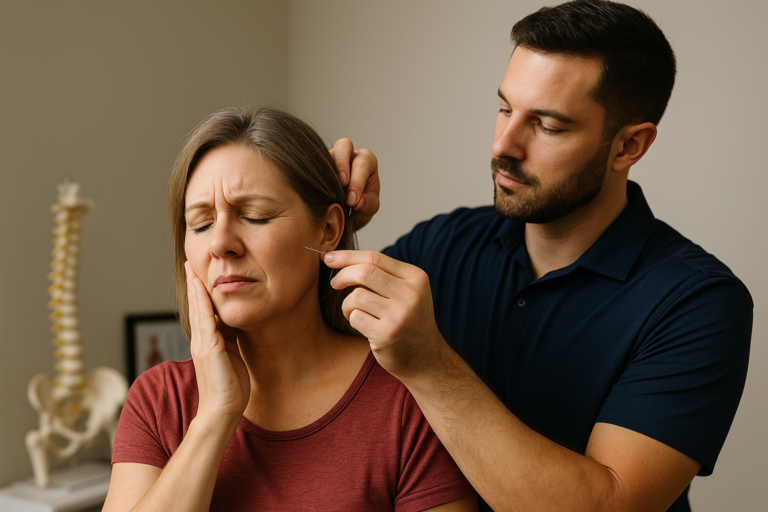
Some patients explore chiropractic for dizziness in Grapevine, TX when symptoms seem to be related to neck pain, stiffness, posture, or movement restriction. A conservative chiropractic approach may include evaluation of spinal and joint mobility, muscle tension, postural strain, and movement habits.
Depending on the clinician’s findings and judgment, care may involve:
- Gentle manual therapy or mobilization
- Targeted chiropractic adjustments when clinically appropriate
- Soft tissue work for tight muscles
- Postural education
- Home exercises to improve neck mobility and stability
- Activity modification to reduce aggravation
The goal is not simply to address pain, but to improve how the neck moves and how the surrounding tissues function. That said, treatment should always be guided by a proper assessment. Not every type of dizziness is appropriate for manual care, and a responsible provider will recognize when referral is needed.
Acupuncture for Balance Issues in Grapevine, TX
Some individuals also consider acupuncture for balance issues in Grapevine, TX as part of a conservative care plan. Acupuncture is often used to support pain relief, reduce muscle tension, and promote relaxation. For people whose dizziness is aggravated by neck tightness, stress, or headache patterns, this may be one component of a broader strategy.
As with any therapy, acupuncture is not a blanket solution for all causes of dizziness. Its role depends on the person’s presentation, medical history, and whether more urgent or non-musculoskeletal causes have been considered.
Rehabilitative Exercise and Movement Training
Exercise is often important in recovery. A plan may include gentle range-of-motion work, postural strengthening, deep neck flexor activation, scapular stability training, and balance-related drills when appropriate. These strategies may help improve body awareness and reduce recurrent strain.
Ergonomic and Lifestyle Changes
Daily habits can either calm symptoms or keep them going. Helpful changes may include:
- Raising screens to eye level
- Avoiding prolonged forward-head posture
- Taking frequent movement breaks during desk work
- Adjusting sleeping position and pillow support
- Gradually returning to activity rather than remaining overly guarded
Small corrections repeated consistently can make a meaningful difference over time.
The Role of Personalized Integrative Care
At Chiro & Acupuncture Inc., care is described as personalized and designed around each patient’s specific pain concerns. For people dealing with neck pain, headaches, whiplash, sports injuries, or joint-related problems, an individualized plan may be especially important because dizziness can have more than one contributing factor.
The practice also incorporates modern technology such as Stemwave therapy, which uses sound waves with the aim of stimulating tissue regeneration and reducing inflammation. In a musculoskeletal setting, approaches like this may be considered when soft tissue irritation or pain is part of the larger clinical picture. The best treatment plan depends on the patient’s presentation, goals, and whether symptoms fit a neck-related pattern versus another medical cause.
Conservative care is often most effective when it does not rely on a one-size-fits-all method. Neck-related dizziness may involve joint restriction in one person, postural overload in another, and lingering whiplash-related dysfunction in someone else.
Practical Examples of When the Neck May Be Involved
Neck-related dizziness often becomes clearer when symptoms follow a recognizable pattern. Examples may include:
- A person who develops dizziness and neck stiffness after a rear-end collision
- An office worker who feels off-balance after long hours looking down at a laptop
- A patient with chronic headaches at the base of the skull and dizziness when turning the head quickly
- An athlete who notices neck tightness, reduced rotation, and unsteadiness after contact or strain
These examples do not confirm cervical dizziness, but they illustrate why the neck deserves consideration during evaluation.
Important Considerations Before Starting Treatment
If you are seeking help for dizziness, keep a few points in mind:
- Get evaluated rather than guessing. Dizziness can come from the neck, inner ear, circulation, medication side effects, neurologic issues, or other causes.
- Notice your triggers. Pay attention to whether symptoms are linked to rolling in bed, standing up quickly, neck movement, screen time, stress, or headaches.
- Share your health history. Prior concussion, migraines, high blood pressure, recent illness, and past injuries all matter.
- Prioritize safety. If you feel faint or unstable, avoid risky activities until you are assessed.
- Expect a process. Neck-related balance issues may improve gradually as irritation decreases and movement normalizes.
When Recovery May Take Longer
Some cases are straightforward, while others are more persistent. Recovery may take longer if dizziness has been present for a long time, if there was a significant whiplash injury, if headaches and stress are also involved, or if the person has become fearful of movement and activity. In these situations, a steady and individualized treatment plan is usually more realistic than expecting a quick fix.
It is also common for more than one factor to be involved. For example, someone might have an inner ear episode that leads to guarding and neck tension, or longstanding neck dysfunction that becomes more noticeable after illness or stress. Good clinical reasoning is essential.
Conclusion
Dizziness is not always just an ear problem. In some people, dysfunction in the cervical spine can interfere with the body’s position-sensing system and contribute to imbalance, disorientation, or motion-related symptoms. That is why the connection between cervical dizziness in Grapevine, TX and neck pain should not be overlooked.
At the same time, dizziness has many possible causes, and some are urgent. A thorough evaluation is the safest path, especially when symptoms are severe, sudden, persistent, or accompanied by neurologic warning signs. When the neck appears to be a contributing factor, conservative options such as posture-focused rehab, manual care, chiropractic for dizziness in Grapevine, TX, and acupuncture for balance issues in Grapevine, TX may play a supportive role within an individualized care plan.
If you have ongoing vertigo and neck pain in Grapevine, TX, the key is not to ignore it or assume the cause. Careful assessment and targeted treatment can help clarify whether the neck is part of the problem and what next steps make the most sense for your health and safety.