Knee pain can affect almost every part of daily life, from walking up stairs and getting out of the car to exercising, working, and sleeping comfortably. For many people, the first question is not just how to reduce pain, but how to do it in a way that supports long-term function without immediately relying on more invasive options. If you are exploring knee pain treatment in Grapevine TX, natural and non-surgical care may be worth considering.
The challenge is that knee pain is not one single condition. It can come from overuse, sports injuries, arthritis, poor movement patterns, muscle imbalance, joint irritation, or compensation from problems in the hips, feet, or lower back. Because the source of pain can vary so much, the best treatment often depends on your symptoms, your activity level, and your goals.
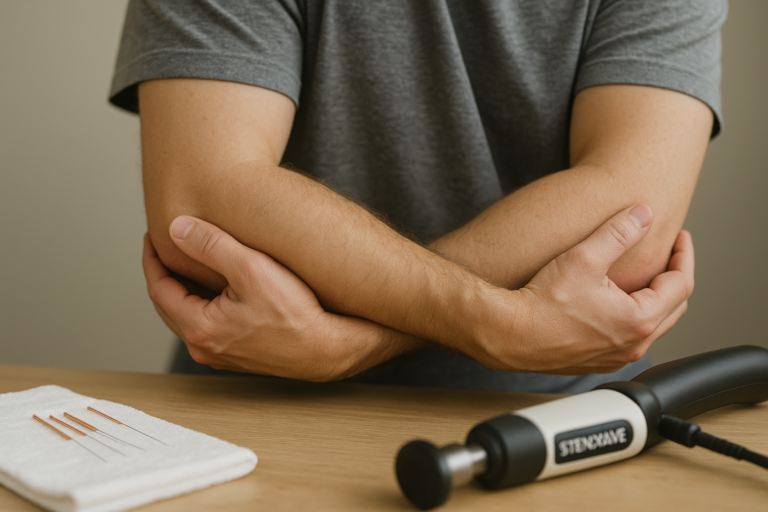
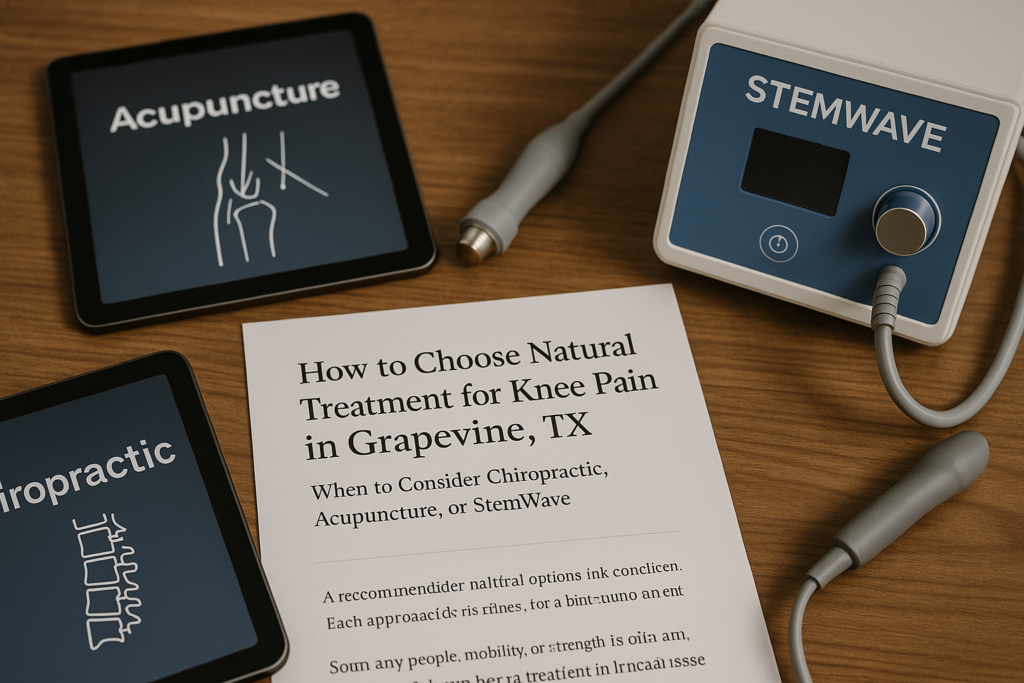
Three commonly discussed natural options are chiropractic for knee pain, acupuncture for knee pain in Grapevine, and StemWave knee pain treatment. Each approach works differently. Some focus on joint mechanics and movement, some target pain modulation and muscle tension, and some are designed to stimulate the body’s healing response in irritated tissue.
This guide explains how these therapies may fit into a natural knee pain care plan, what signs may point you toward one option over another, and what to think about before deciding which approach may be right for you.
Why knee pain happens in the first place
Before choosing a treatment, it helps to understand that the knee is influenced by more than just the joint itself. The knee sits between the hip and the ankle, so problems above or below it can change how force moves through the leg. When alignment, mobility, or strength is off in one area, the knee often absorbs extra stress.
Common contributors to knee pain include:
- Overuse from running, squatting, kneeling, or repetitive job tasks
- Ligament or meniscus irritation after a twist, pivot, or awkward movement
- Tendon irritation around the kneecap or along the patellar tendon
- Arthritic changes that create stiffness, soreness, or swelling
- Muscle tightness or weakness in the quadriceps, hamstrings, calves, or glutes
- Poor foot mechanics that alter knee tracking
- Changes in gait after a back, hip, or ankle issue
Because there are many possible causes, natural treatment should not be chosen based on trend alone. A more useful question is: What is most likely driving the pain, and what kind of support does the body need right now?
When natural treatment may be a reasonable first step
Many people look for conservative care before considering injections or surgery, especially when the pain is persistent but not an emergency. Natural treatment may be worth exploring when:
- The pain is mild to moderate and has been lingering for days, weeks, or months
- You have stiffness, soreness, or reduced mobility that affects daily life
- You want a non-drug approach when possible
- You are trying to stay active while addressing the underlying issue
- You have recurring flare-ups and want better symptom control
- You are looking for supportive care alongside exercise or rehabilitation
However, knee pain is not always something to self-manage. Prompt medical evaluation is important if you cannot bear weight, the knee looks deformed, swelling appeared suddenly after trauma, the joint locks completely, you have signs of infection such as redness and fever, or the pain is severe and rapidly worsening.
How chiropractic for knee pain may help
When people hear the word chiropractic, they often think only of the spine. In reality, chiropractors may also evaluate how extremity joints move, including the hips, knees, ankles, and feet. Chiropractic for knee pain generally focuses on biomechanics: how the joints and surrounding structures are moving and whether poor mechanics are increasing irritation.
What chiropractic care typically focuses on
For knee-related complaints, a chiropractor may assess:
- Range of motion in the knee joint
- Movement in the hips, pelvis, ankles, and feet
- Walking pattern and weight distribution
- Muscle imbalance or tightness that changes knee tracking
- Postural habits and repetitive strain factors
Treatment may include joint mobilization or adjustment, soft tissue work, movement guidance, and recommendations for corrective exercise or activity modification. The overall goal is often to reduce mechanical stress on the knee and improve function during everyday movement.
When chiropractic may be a good fit
Chiropractic care may be worth considering if your knee pain seems related to movement or alignment, such as:
- Pain that gets worse with walking, stairs, squatting, or standing after sitting
- A feeling that the knee is not tracking smoothly
- Tight hips, stiff ankles, or low back discomfort along with knee symptoms
- Recurring pain that may be linked to posture or gait
- Uneven wear patterns from sports, work, or exercise routines
For example, a person in Grapevine who spends long hours driving and then notices knee pain getting out of the car may actually be dealing with a combination of hip tightness, altered leg position, and joint stiffness. In that case, a biomechanical approach may be useful.
Important considerations
Chiropractic care is not a one-size-fits-all solution for every type of knee pain. If the main issue is acute swelling after injury, a suspected tear, or significant inflammatory flare-up, imaging or orthopedic evaluation may be needed first. Chiropractic care tends to be most relevant when joint mechanics, mobility, and movement patterns are part of the problem.
When acupuncture for knee pain in Grapevine may be worth considering
Acupuncture for knee pain in Grapevine is often sought by people who want a natural approach to pain relief and improved comfort without medication. Acupuncture involves placing very thin needles at specific points to encourage the body’s regulatory response. In general use, acupuncture is commonly chosen to help with pain modulation, muscle tension, circulation support, and relaxation.
How acupuncture may support knee pain care
While treatment plans vary, acupuncture is often considered for:
- Chronic knee discomfort that feels achy, sore, or stiff
- Muscle tension around the knee or thigh
- Pain that flares with activity but also lingers at rest
- Arthritic knee symptoms that include stiffness or dull pain
- Situations where stress or poor sleep may be amplifying pain perception
Some patients describe acupuncture as helping the area feel calmer, looser, or less irritated, especially when the pain has a chronic, stubborn pattern rather than a dramatic acute injury pattern.
When acupuncture may be a strong option
Acupuncture may be especially appealing if:
- You prefer a low-force, non-surgical treatment style
- Your pain has a strong tension, stiffness, or inflammation-like component
- You are looking for a complement to exercise, manual therapy, or rehab
- You want an approach that may also support overall relaxation and recovery
For instance, someone with knee stiffness that is worse in the morning, soreness after activity, and lingering tightness in the surrounding muscles may find acupuncture fits well into a broader natural care strategy.
Important considerations
Acupuncture can be a useful supportive therapy, but it should still be part of a thoughtful evaluation. If your knee pain is being driven by a major structural injury or by significant instability, acupuncture alone may not address the full issue. In many cases, it works best when combined with a plan that also improves mobility, strength, and movement habits.
What StemWave knee pain treatment is and when it may be considered
StemWave knee pain treatment is a non-invasive therapy that uses acoustic wave technology intended to stimulate the body’s natural healing response. It is often discussed in relation to soft tissue irritation, chronic pain patterns, and areas that have not responded fully to rest or basic home care.
How StemWave is generally used
StemWave is typically considered for areas with chronic irritation or reduced tissue resilience. The goal is not simply to mask symptoms, but to encourage a more active biological response in the affected tissue. In a knee-related setting, it may be explored for tendon-related discomfort, chronic soreness, and other musculoskeletal complaints where tissue quality and healing response are part of the picture.
When StemWave may make sense
This option may be worth asking about if:
- Your pain has been persistent and is not improving as expected
- The discomfort feels localized to a tendon, attachment point, or irritated soft tissue area
- You want a non-invasive option before considering more invasive procedures
- You are dealing with a chronic overuse pattern rather than a fresh emergency injury
An example might be a recreational athlete with ongoing pain near the patellar tendon that returns every time training volume increases. If the tissue remains irritated despite rest, stretching, and basic strengthening, a regenerative-supportive therapy may be part of the conversation.
Important considerations
StemWave is not automatically the first choice for every knee problem. If pain is mainly caused by major instability, severe arthritis, fracture, or a condition requiring urgent medical management, this type of therapy may not be the primary answer. It is generally most relevant when chronic soft tissue irritation is part of the clinical picture.
How to decide between chiropractic, acupuncture, and StemWave
If you are comparing knee pain treatment in Grapevine TX options, it helps to think in terms of the main pattern of your symptoms rather than trying to find one “best” treatment for everyone.
Consider chiropractic if the issue feels mechanical
You may lean toward chiropractic care if the pain changes noticeably with posture, walking pattern, stair use, squatting, or alignment. It may also be a practical choice if you suspect the knee is being affected by the hips, low back, ankles, or feet.
Consider acupuncture if the issue feels chronic, tense, or reactive
You may lean toward acupuncture if the knee feels persistently achy, stiff, inflamed, or tight, especially when stress, poor sleep, or muscle tension seem to make the pain feel worse.
Consider StemWave if the issue feels stubborn and tissue-focused
You may lean toward StemWave if the pain has become chronic, seems localized to an irritated tendon or soft tissue area, and has not improved enough with rest or basic conservative care.
Sometimes a combination approach is most logical
These treatments are not always mutually exclusive. A person with knee pain may have more than one contributing factor. For example:
- A runner may need gait and joint assessment through chiropractic care, while also using acupuncture to calm pain and muscle guarding.
- A person with chronic tendon irritation may benefit from StemWave while also working on mechanics and strengthening.
- Someone with arthritic stiffness may combine movement-focused care with acupuncture for symptom support.
The most effective natural plan often addresses both the cause of stress on the knee and the pain response that keeps the area irritated.
What to pay attention to before choosing a provider or treatment plan
No matter which option interests you most, the quality of the evaluation matters. A careful provider should want to understand how the pain started, what movements aggravate it, whether swelling or instability is present, and how the problem is affecting your daily function.
Look for a treatment approach that considers:
- Your activity level and goals
- How long the pain has been present
- Whether there was a specific injury
- Whether symptoms are sharp, dull, stiff, unstable, or localized
- What self-care you have already tried
- Whether nearby joints or muscles may be contributing
It is also reasonable to ask what the treatment is trying to accomplish. Is the goal to improve mobility? Reduce pain sensitivity? Support tissue recovery? Improve joint mechanics? A clearer explanation usually leads to better expectations.
Practical examples of choosing the right natural approach
Example 1: Pain with stairs and squatting
If your pain is mostly around the front of the knee and flares during stairs, lunges, and squats, mechanics may be part of the issue. Tracking problems at the kneecap, hip weakness, ankle restriction, or movement compensation could all play a role. In this situation, chiropractic evaluation may help identify whether biomechanical stress is contributing.
Example 2: Stiff, achy knee that feels worse after inactivity
If your knee feels stiff after sitting, sore in the morning, and generally achy throughout the day, acupuncture may be appealing as a low-force option to support comfort and reduce lingering irritation. This may be especially relevant when pain is chronic and diffuse rather than tied to a single sharp injury event.
Example 3: Localized tendon pain that keeps returning
If the pain is very specific, such as just below the kneecap or on the side of the knee, and keeps returning with sports or repetitive work, StemWave may be worth discussing. This pattern may suggest a stubborn soft tissue issue that needs more than temporary rest alone.
The role of movement, strength, and daily habits
Even the best natural treatment is more effective when paired with smart daily habits. Knee pain often improves more reliably when you also address how you move and load the joint over time.
Helpful habits may include:
- Adjusting activity volume instead of pushing through flare-ups
- Improving hip and leg strength as tolerated
- Maintaining ankle and hip mobility
- Wearing supportive footwear when appropriate
- Using better form during exercise, lifting, and stairs
- Avoiding long periods in one position if stiffness is a trigger
Natural therapies can support recovery, but they usually work best as part of a broader strategy that respects the demands you place on your body each day.
When natural care should be re-evaluated
Conservative care should feel purposeful, not endless. If a treatment plan is not changing symptoms, function, or activity tolerance over time, it may need to be adjusted. Persistent knee pain sometimes requires imaging, orthopedic input, or a more structured rehabilitation plan.
It is wise to re-evaluate if:
- Pain keeps intensifying
- The knee gives way or locks
- Swelling repeatedly returns
- You cannot resume normal daily tasks
- Symptoms shift from nuisance-level to activity-limiting
A good plan should evolve based on how your body responds.
Conclusion
Choosing a natural option for knee pain starts with understanding the pattern behind the symptoms. If your pain appears linked to alignment, mobility, or movement dysfunction, chiropractic for knee pain may be a practical place to start. If the knee feels chronically stiff, achy, or tension-driven, acupuncture for knee pain in Grapevine may offer supportive relief as part of a broader plan. If the discomfort is persistent, localized, and tied to stubborn soft tissue irritation, StemWave knee pain treatment may be worth considering.
For anyone seeking knee pain treatment in Grapevine TX, the most helpful approach is usually the one that matches the cause of the pain, not just the location of the pain. A thoughtful evaluation, realistic expectations, and a plan that supports both recovery and function can make a meaningful difference in how confidently you move again.