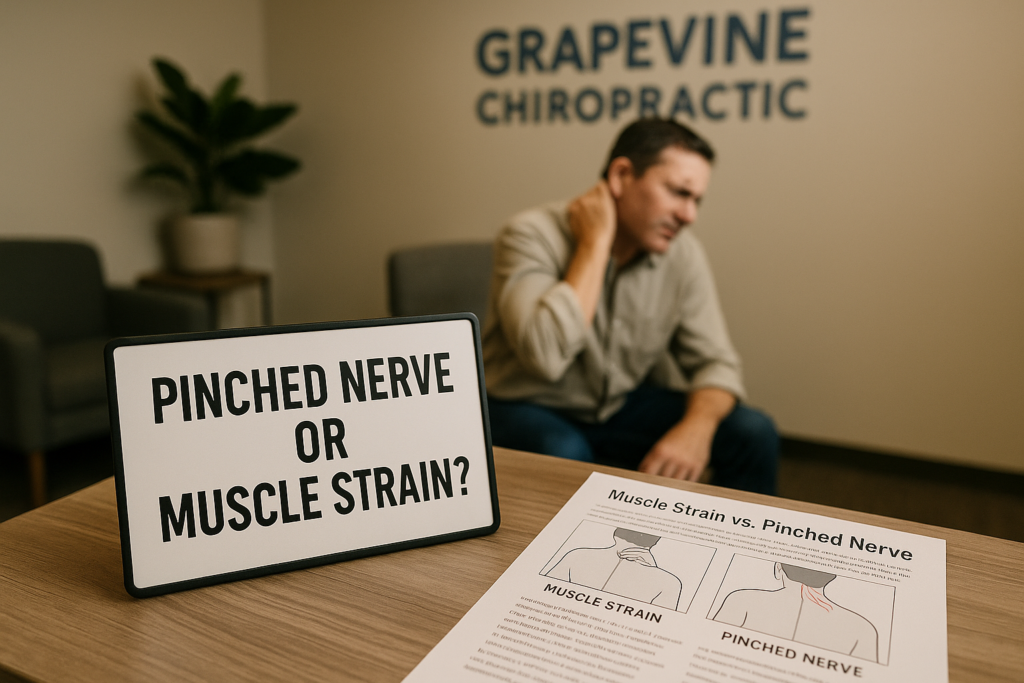
Neck and back pain can start suddenly after lifting something heavy, sleeping in an awkward position, spending too many hours at a desk, or dealing with a minor sports injury. When that pain shows up, many people wonder whether they are dealing with a simple muscle strain or something more like a pinched nerve. While both problems can cause discomfort and limit movement, they are not the same, and the pattern of symptoms often offers important clues.
Understanding the difference between a muscle strain vs pinched nerve can help you make better decisions about rest, activity, and when to seek care. For people looking for help with neck and back pain Grapevine area concerns, it is especially useful to know which symptoms may improve with basic home care and which ones should not be ignored.
Below, we will break down how muscle strains and pinched nerves happen, what symptoms commonly set them apart, and when to see a chiropractor Grapevine residents may consider as part of their care plan.
Why Muscle Strains and Pinched Nerves Get Confused
It is easy to mix these two problems up because both can create pain in similar areas, especially the neck, shoulders, lower back, and upper back. In some cases, a muscle strain can also cause nearby tissues to tighten and irritate nerves. In other cases, a nerve problem may trigger muscle spasms or weakness, making it feel like the muscles are the main issue.
For example, someone who wakes up with sharp neck pain may assume they simply slept wrong. Another person may feel lower back pain after yard work and think it is just overuse. Sometimes that is true. But if there is radiating pain, numbness, tingling, or unusual weakness, the problem may involve nerve irritation rather than only strained muscle tissue.
Because the symptoms can overlap, it helps to look at the quality of pain, the location, whether symptoms travel, and what movements make things worse or better.
What Is a Muscle Strain?
A muscle strain happens when muscle fibers or the attached tendon are overstretched or torn. This may occur from lifting, twisting, sudden movement, repetitive overuse, poor posture, sports activity, or even staying in one position too long. Strains can range from mild to more painful injuries that significantly limit motion for days or weeks.
Common signs of a muscle strain
- Localized pain that stays mostly in one area
- Soreness or tenderness when pressing on the muscle
- Stiffness, especially after rest or the next day
- Muscle spasm or tightness
- Pain with movement or with using the affected muscle
- Mild swelling or bruising in some cases
A muscle strain often feels achy, tight, sore, or cramp-like. The pain tends to be more noticeable when you contract, stretch, or load that muscle. For example, a strained lower back muscle may hurt when standing up from a chair, bending forward, or twisting. A strained neck muscle may feel worse when turning your head or holding the same posture too long.
One key feature of a muscle strain is that symptoms usually remain fairly localized. They may spread slightly into nearby tissue, but they do not typically travel in a clear line down an arm or leg.
What Is a Pinched Nerve?
A pinched nerve happens when a nerve is irritated or compressed by surrounding structures such as discs, joints, inflammation, muscles, or other soft tissues. The term is commonly used to describe nerve compression in the neck or spine, though similar issues can happen in other parts of the body as well.
When a nerve is affected, the symptoms often follow the path of that nerve. This is one of the biggest clues that the problem may be more than a muscle strain.
Common signs of a pinched nerve
- Radiating pain that travels into the shoulder, arm, buttock, or leg
- Tingling or “pins and needles”
- Numbness
- Burning, shooting, or electric-like pain
- Weakness in the affected limb
- Symptoms that worsen with certain positions, such as prolonged sitting or looking down
For example, a pinched nerve in the neck might cause pain that starts near the neck or shoulder blade and travels down the arm into the hand. A pinched nerve in the lower back may create pain that moves through the buttock and down the leg. This pattern is very different from the more contained soreness of a strained muscle.
People seeking pinched nerve treatment Grapevine TX often describe symptoms as sharp, zapping, burning, or tingling rather than simply sore or tight.
Muscle Strain vs Pinched Nerve: Key Differences
If you are trying to tell the difference between a muscle strain vs pinched nerve, these comparisons can help.
1. Where the pain stays or travels
Muscle strain: Pain usually stays in one spot or in a limited area.
Pinched nerve: Pain often radiates along a path, such as down the arm or leg.
2. What the pain feels like
Muscle strain: Aching, tightness, cramping, soreness, tenderness.
Pinched nerve: Sharp, shooting, burning, electric, tingling, numb.
3. Whether you feel neurological symptoms
Muscle strain: Usually does not cause numbness or tingling.
Pinched nerve: Commonly associated with numbness, tingling, or weakness.
4. What triggers symptoms
Muscle strain: Often worse when using or stretching the injured muscle.
Pinched nerve: May worsen with spinal position changes, prolonged sitting, repetitive neck posture, coughing, or certain directional movements.
5. How the area feels to touch
Muscle strain: The area may feel tender, tight, or knotted.
Pinched nerve: The painful area may not be especially tender to touch, even though symptoms can be intense elsewhere along the nerve path.
Examples of Common Real-Life Situations
A likely muscle strain
You spend the weekend moving furniture or doing landscaping. Later that day or the next morning, your lower back feels sore, tight, and stiff. It hurts to bend, twist, or get up from bed, but the pain stays mostly in the low back and does not travel down the leg. That pattern is more consistent with a muscle strain.
A likely pinched nerve in the neck
You notice neck pain after long hours on a laptop, then start feeling tingling that runs from the neck into the shoulder, arm, or fingers. Turning your head or looking down at your phone makes it worse. That pattern is more suggestive of a pinched nerve.
A likely pinched nerve in the low back
You have low back pain that also shoots into the buttock or down one leg, especially after sitting in the car or standing up after a long day. You may feel numbness in part of the foot or weakness when lifting the leg. Those are warning signs of nerve involvement rather than a simple muscle issue.
Can a Muscle Strain Turn Into Nerve Irritation?
Sometimes, yes. A strained or inflamed muscle can tighten and place pressure on nearby nerves. This does not always mean there is a major structural problem, but it can make the symptoms more complicated. For example, severe muscle spasm around the neck or low back can contribute to pain that starts to radiate. That is one reason self-diagnosis is not always easy when pain lingers or changes.
Likewise, a pinched nerve can cause muscles to guard, tighten, or spasm in response. The result is that a person may feel both deep muscular tension and nerve-related symptoms at the same time.
When Home Care May Help
Mild muscle strains and some minor irritation-related problems can improve with conservative home care in the early stage. General approaches often include:
- Reducing activities that clearly aggravate the pain
- Avoiding complete bed rest and trying gentle movement as tolerated
- Using ice in the first day or two after a fresh injury, then considering heat for stiffness if it feels soothing
- Paying attention to posture during computer work, driving, and phone use
- Using gentle stretching only if it does not increase radiating symptoms
- Gradually returning to normal activity rather than doing too much too soon
It is important to remember that “toughing it out” is not always the best strategy. If your symptoms are getting worse, spreading, or interfering with daily life, it may be time to seek a professional evaluation.
When to See a Chiropractor in Grapevine
Many people are unsure when to see a chiropractor Grapevine patients may turn to for assessment of musculoskeletal pain. In general, it makes sense to seek an evaluation when pain is not improving as expected, keeps returning, or is affecting your ability to work, sleep, drive, exercise, or manage normal routines.
Consider seeking care if:
- Your neck or back pain lasts more than several days without meaningful improvement
- You have repeated episodes of the same pain
- You notice pain radiating into an arm or leg
- You have tingling or numbness that does not quickly go away
- Pain is limiting your range of motion or usual daily activities
- Your symptoms seem related to posture, desk work, commuting, lifting, or repetitive movement
For many people with neck and back pain Grapevine area concerns, a hands-on musculoskeletal evaluation can help identify whether symptoms are more consistent with joint dysfunction, muscle strain, postural stress, or nerve irritation. That distinction matters because the most helpful care approach may differ depending on the cause.
When Symptoms Need Prompt Medical Attention
Not all neck and back pain should be managed in the same setting. Some symptoms require prompt medical evaluation rather than routine conservative care.
Seek urgent medical attention if you have:
- Sudden severe weakness in an arm or leg
- Loss of bowel or bladder control
- Numbness in the groin or saddle area
- Severe pain after a fall, collision, or other trauma
- Fever, unexplained weight loss, or other signs of illness along with back or neck pain
- Chest pain, shortness of breath, or symptoms that do not seem musculoskeletal
These signs may point to problems that need immediate medical assessment. If you are unsure, it is safer to seek timely medical advice.
What a Professional Evaluation May Consider
When a provider assesses neck or back pain, the goal is usually to understand the pattern of symptoms, what movements reproduce them, whether any neurological signs are present, and how long the issue has been going on. General evaluation may include:
- Review of how the pain started
- Location and description of symptoms
- Range of motion testing
- Posture and movement assessment
- Strength, sensation, and reflex checks when nerve involvement is suspected
- Discussion of work habits, sports, sleep setup, and daily activities
This kind of assessment can help separate a straightforward muscle strain from a problem that may involve nerve compression or irritation. It can also highlight contributing factors such as workstation setup, repetitive strain, lifting mechanics, poor recovery habits, or lack of movement throughout the day.
Practical Steps to Help Prevent Future Flare-Ups
Whether your issue turns out to be a strain or a pinched nerve, prevention often comes down to reducing stress on the neck and spine while improving how the body handles daily loads.
Helpful habits may include:
- Improving posture during desk work and phone use
- Taking movement breaks instead of sitting for long periods without changing position
- Using proper lifting mechanics and avoiding sudden twisting under load
- Building core and postural strength gradually
- Warming up before exercise and increasing intensity progressively
- Paying attention to sleep position and pillow support for the neck
Even small adjustments can make a difference. For instance, raising a laptop screen to eye level, keeping the shoulders relaxed, and taking short walk breaks during the workday may reduce strain on the neck and upper back. Similarly, using the legs rather than rounding and twisting through the lower back when lifting can reduce the risk of low back flare-ups.
Why Early Attention Can Be Helpful
One of the biggest mistakes people make is waiting too long to address symptoms that are not resolving. A mild strain may become more stubborn if you continue aggravating it. A pinched nerve may become more disruptive if radiating pain, tingling, or weakness are ignored. Early attention can help clarify what is going on and support a more appropriate plan for recovery.
This does not mean every ache needs immediate treatment. But if your symptoms are recurring, changing, or beginning to affect your routine, it is reasonable to have them evaluated rather than guessing.
Conclusion
Telling the difference between a pinched nerve and a muscle strain is not always simple, but the symptom pattern often provides useful clues. Muscle strains tend to cause localized soreness, tightness, and pain with movement or use. Pinched nerves are more likely to cause radiating pain, tingling, numbness, burning sensations, or weakness that follows a path into the arm or leg.
If you are dealing with persistent or recurring neck and back pain Grapevine residents commonly experience from work, driving, exercise, or everyday strain, paying attention to these signs can help you decide what to do next. Mild symptoms may improve with rest, activity modification, and better posture, but pain that lingers, spreads, or includes neurological symptoms deserves closer attention. Knowing when to see a chiropractor Grapevine patients may consider, and when symptoms require prompt medical care, can help you respond sooner and more confidently.
Most importantly, do not ignore symptoms that are worsening or interfering with normal life. The sooner you understand whether you are facing a simple strain or need evaluation for possible pinched nerve treatment Grapevine TX concerns, the easier it may be to make informed decisions about your care.